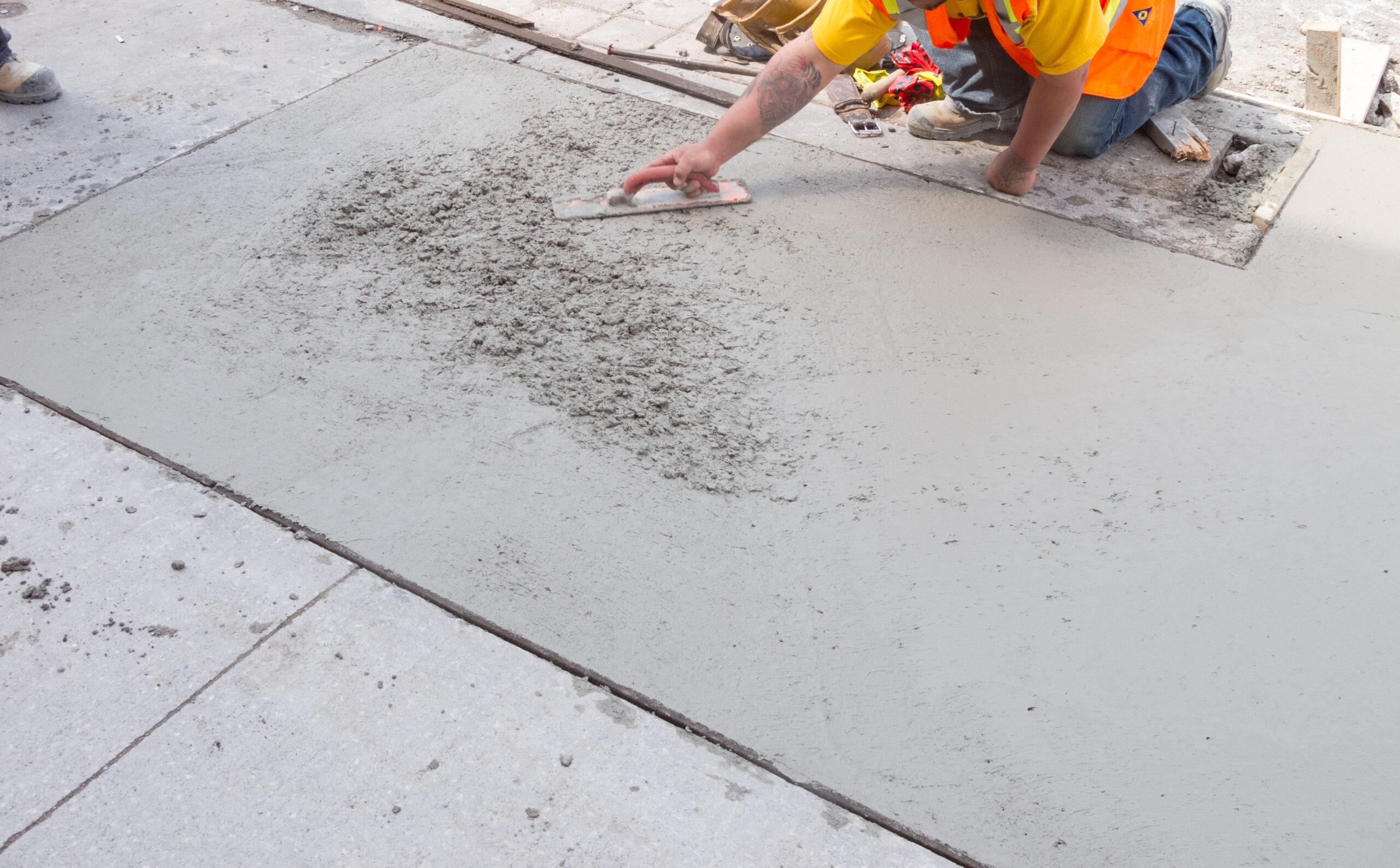
Fargo winters are tough on everything outdoors, and concrete is no exception. Driveways, patios, walkways and steps all go through months of snow, ice, de-icing salt and constant freezing and thawing. Most of the damage you see in spring, like flaking surfaces, new cracks and rough pitted patches, started in winter.
The good news is that you can prevent a lot of it. This guide explains what winter does to concrete, which de-icers to avoid, how to care for a brand-new slab, and when to call a professional.
Why Fargo Winters Are So Hard on Concrete
Concrete looks solid, but it’s porous. Water soaks into the surface, and when it freezes it expands. That pressure can crack the concrete or break off the surface layer. When the ice melts and refreezes again and again, the damage builds up.
This happens a lot in our climate. NOAA engineering weather data for the Fargo area lists roughly 60 freeze-thaw cycles in an average year. Every cycle is another chance for trapped moisture to push against the concrete from the inside.
De-icing salt makes it worse. Salt melts ice, but the melted water refreezes, which adds more freeze-thaw cycles at the surface. Some de-icing chemicals also attack the concrete itself.
Signs of Winter Damage to Look For
Check your concrete once the snow melts. Common signs include:
- Scaling: the top layer flakes or peels away, leaving a rough, pitted surface
- Spalling: larger chips or pieces break off, often near edges and joints
- New or widening cracks: water gets in, freezes and pries the crack open
- Pop-outs: small cone-shaped pieces break out of the surface
- White residue: salt deposits on the surface can mean moisture and salt are soaking in
Small problems are much cheaper to fix than big ones, so don’t ignore them.
9 Ways to Protect Your Concrete This Winter
1. Clear snow early and often
Snow that melts during the day and refreezes at night adds freeze-thaw cycles. Shovel regularly rather than letting it pile up and compact. Use a plastic shovel or a snow blower with a plastic or rubber edge, since metal blades can chip the surface.
2. Seal your concrete before winter
A quality sealer reduces how much water and salt soak into the surface. This is one of the best things you can do to protect it. Ideally, sealing happens in the fall before the first freeze. If temperatures have already dropped too low, plan to seal in spring or early fall instead, because sealers need a dry surface and suitable temperatures to cure properly. Follow the manufacturer’s limits.
3. Skip de-icers on new concrete
New concrete is the most vulnerable. See the section below.
4. Choose de-icers carefully
No de-icer is completely harmless to concrete. If you must use one, use as little as possible. See the quick guide below.
5. Use sand for traction
Sand won’t melt ice, but it gives you grip without the chemical risk. It’s a good choice for steps and walkways.
6. Fix cracks before the freeze
A small crack lets water in. Fill and seal cracks in the fall so moisture can’t get underneath and expand over winter.
7. Keep water draining away
Gutters, downspouts and the slope of your yard should send water away from concrete. Standing water or constant dripping onto a slab leads to more freezing at the surface.
8. Don’t let salt get tracked on
Salt from roads and cars gets carried onto driveways and garage floors. Rinse it off when temperatures allow, and sweep up leftover granules.
9. Wait for the right time to use heavy equipment
Avoid parking heavy vehicles or equipment on thin or damaged slabs during deep freezes, when cracks and weak spots are more likely to give.
Your First Winter With New Concrete
If you had concrete poured this year, its first winter is the most important. Newly poured concrete needs time to cure and dry out, and during that period it’s more vulnerable to freezing damage and to de-icers.
The most common advice from concrete professionals:
- Don’t use de-icing chemicals during the first winter
- Use sand or a similar traction material instead
- Make sure a sealer is on before the first winter hits, if possible
- Seal joints so water can’t get underneath the slab
- Reseal before the second winter, then recoat every couple of years depending on wear
If Beyond Concrete installed your slab, ask us about the best care plan for it.
De-Icer Quick Guide
| Option | How it affects concrete |
|---|---|
| Shoveling or snow blowing | Safest option. Best first line of defense |
| Sand or traction grit | Safe for concrete. Adds grip but doesn’t melt ice |
| Rock salt (sodium chloride) | Can contribute to scaling. Use sparingly, never on new concrete |
| Other chloride de-icers | Work at lower temperatures, but still add moisture and freeze-thaw risk. Use sparingly |
| Ammonium nitrate or ammonium sulfate products | Avoid. These can chemically attack concrete |
A good sealer helps with all of these, but no sealer can completely stop salt damage.
When Should You Seal Concrete?
Sealing works best on clean, dry concrete in mild weather. Many homeowners seal in early fall, or in late spring after the surface has fully dried. How often to reseal depends on traffic, sun, snow removal and the product used. Every two to three years is common for driveways and walkways.
Our sealing and restoration service includes cleaning and preparing the surface, so the sealer bonds and lasts. If your concrete is decorative or stained, a sealer also keeps the color looking fresh. See our decorative concrete and concrete staining options.
Spring Checklist After the Thaw
Once the snow is gone, walk around your property and:
- Look for scaling, spalling and new cracks
- Check joints and edges for crumbling
- Note where water pools after rain
- Test whether your sealer is still working. If water soaks in instead of beading up, it may be time to reseal
- Take photos so you can compare year to year
Repair, Resurface or Replace?
Not every damaged slab needs to be torn out. The right fix depends on how deep the problem goes:
- Minor cracks and light surface wear: cleaning, crack repair and sealing
- Widespread surface scaling: resurfacing or an overlay may restore the surface
- Deep cracking, heaving or settling: replacement may be the better long-term choice
If you’re considering a new slab, read our guide to what to know before installing a new concrete driveway, or see our driveway installation and patio and walkway services. For an overview of everything we do, read our residential concrete services guide.
Concrete Contractor in Fargo, ND
Beyond Concrete has nearly 20 years of experience with driveways, patios, decorative finishes, epoxy floors and more. We’re a certified Treadstone installer, and with our sister company, Beyond Outdoors, we offer complete solutions for outdoor living. We know what Fargo winters do to concrete, and we build and protect surfaces with that in mind.
Frequently Asked Questions
Can I use salt on my concrete driveway? It’s best to avoid it or use as little as possible. Salt can contribute to scaling and surface damage, especially on new or unsealed concrete. Shoveling and sand are safer.
When can I use de-icer on new concrete? Most professionals recommend not using de-icing chemicals during the first winter. Ask your installer how long to wait for your slab.
Does sealing concrete really help? Yes. A quality sealer reduces how much water and salt soak into the surface, which lowers the risk of freeze-thaw damage. It doesn’t make concrete immune, so it works best alongside good snow removal and drainage.
How often should I reseal my concrete? Every two to three years is common, depending on wear and exposure. If water no longer beads on the surface, it may be time.
Can I seal concrete in winter? Usually not. Sealers need a dry surface and temperatures within the manufacturer’s range. Plan to seal in early fall or in spring.
Why is my concrete flaking? Flaking, or scaling, is typically caused by water freezing in the surface layer, often made worse by de-icing salt. A professional can tell you whether it needs sealing, resurfacing or replacement.
Get a Free Concrete Estimate
Whether you want to protect an existing slab or build a new one, we can help. Call Beyond Concrete at (701) 318-6459 or request a free estimate. We’ll give you honest advice on what your concrete needs.